
Core Jumping and Timing
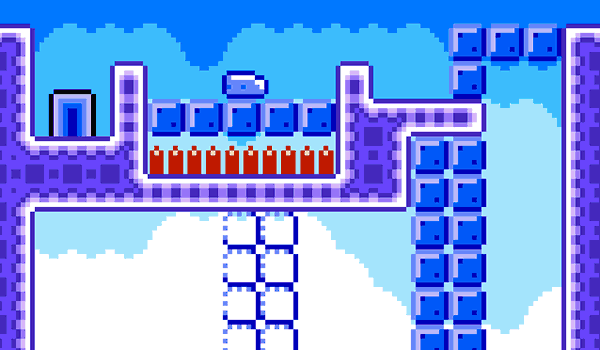
Mini Block Runner asks a simple question: can you read a spike pattern and jump at the right moment? You control a small block character with left and right movement plus a jump. Every level ends at an exit, but the path is lined with spikes. Some spikes stay put; others move. Touching any spike restarts the level instantly. That restart loop is the whole game — observe, attempt, adjust, repeat.
Level Design and Rising Challenge
Each stage introduces new spike arrangements rather than just adding more of the same. Early levels leave generous gaps; later ones tighten the space between hazards and mix stationary spikes with moving ones. Because there is no timer, difficulty comes from precision and pattern recognition, not from speed. You can stand still and study a layout before committing to a jump. That design choice keeps the game calm even when the timing window gets narrow.
Controls and Accessibility
Arrow keys or on-screen buttons move the block left and right; the up arrow or jump button makes it leap. The one-button tag fits because a single action — jump — solves most problems. Children and adults can both pick it up, and the family-friendly presentation avoids violent or frightening imagery. Smooth movement makes precise landings feel fair rather than random.
How to Improve at Mini Block Runner
Watch a spike pattern for a few seconds before moving. Break each level into single jumps instead of planning the whole route at once. If a section keeps failing, step away briefly and return with fresh timing. Practice is the main progression tool here — there are no upgrades or unlocks to grind, just your own read of each layout.
COMMENTS
0 comments