
Core Gameplay Loop
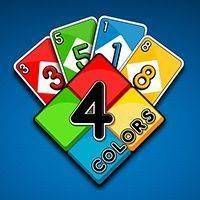
In Hue Harmony Card Challenge, each participant receives a hand of cards at the start. A single card is placed face-up in the center to begin the discard pile. On a turn, a player must play a card from their hand that shares a color, number, or symbol with the top card of the discard pile. If no matching card is available, the player draws one from the draw pile. The round ends as soon as one player has no cards left, earning them points based on the cards remaining in opponents' hands.
Special Card Effects
Several cards introduce twists to the standard flow. A Skip card causes the next player to lose their turn. A Reverse card changes the order in which turns are taken. A Draw Two card forces the next player to pick up two cards and skip their turn. Wild cards allow the player who plays them to choose the active color. Wild Draw Four cards let the player select a new color and force the next player to draw four cards, but can only be played when the player has no other card of the current color.
Opponent Personalities
The game includes three computer-controlled opponents, each programmed with a distinct approach. One may play aggressively, using action cards early to disrupt others. Another might hoard Wild cards for critical moments. The third could focus on quickly reducing their hand size. This variety ensures that no two rounds feel exactly the same, as players must adapt to different tactical patterns.
Scoring and Replay Value
After each round, points are awarded based on the total value of cards left in the hands of the other players. Number cards carry their face value, while action and Wild cards have higher point values. The game continues across multiple rounds until a player reaches a predetermined point threshold. This system encourages players to think not just about winning the current round, but also about minimizing the points they leave for opponents.
Family-Friendly Design
The interface is clean and intuitive, with large, clearly labeled cards that are easy to read on any screen. No reading is required to understand the symbols, making the game accessible to younger players and those who prefer visual cues. Rounds typically last between five and fifteen minutes, fitting naturally into short breaks or longer game sessions. The lack of complex setup or lengthy tutorials means families can start playing immediately.
COMMENTS
0 comments