
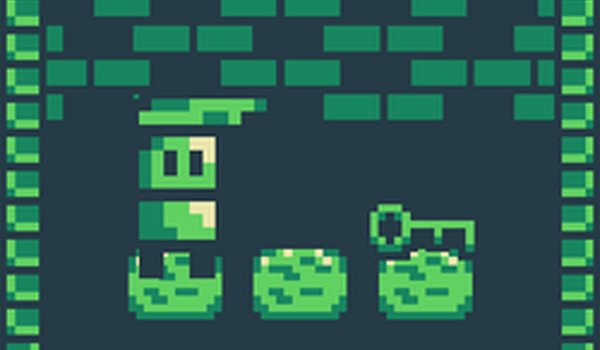
Building Paths in a Dungeon Grid
Keydungeon drops you into a top-down dungeon with a simple but demanding loop: every key in the level must be collected before the exit door will matter. Gaps and obstacles block direct routes, so you place tiles from a menu to create walkable ground. Regular tiles cover basic gaps, while sturdy tiles handle sections that require more durable footing. The puzzle is not about reflexes; it is about reading the room and deciding where each tile earns its place.
Planning Every Tile
Because the tile supply is limited by the level design, placement order matters. A route that reaches one key may strand you before the next. You can restart at any time, and the game expects you to use that option when a layout stops making sense. Keyboard-only movement keeps your hands in one place, and the tile menu is part of the same input scheme, so switching between walking and building stays quick.
Progression and Visual Style
Levels grow more complex as you go, introducing denser obstacle arrangements and longer key routes. The pixel art, created with Aseprite, gives each dungeon a clean, readable look that keeps important tiles and hazards distinct. Unity handles the underlying systems, but the challenge stays with the player: think ahead, commit to a path, and adjust when the first plan fails.
COMMENTS
0 comments