
The Color-Matching Core
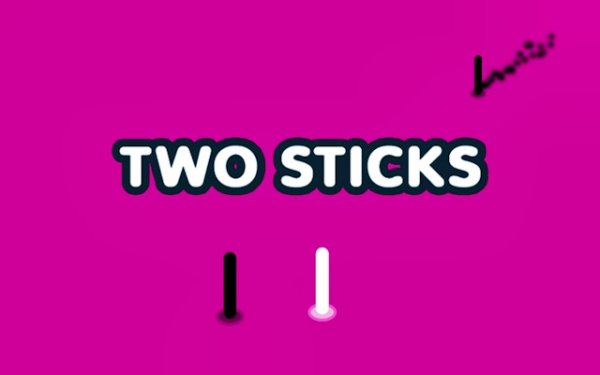
Hue Reflex Tapper builds its entire challenge around a single interaction: watching two rotating elements and tapping at the moment they line up with an incoming object of the same color. There is no aiming, no complex input sequence, and no hidden resource to manage. The game asks one question repeatedly, and the answer is always a matter of timing.
What makes that question interesting is the multiplier. Every correct alignment adds to a growing score bonus, so a player who stays accurate for longer is rewarded disproportionately. Missed taps or wrong alignments break that chain, which means the real tension is not in any single tap but in protecting a streak that took time to build.
How the Difficulty Rises
The opening rounds move at a comfortable speed, giving players room to learn the rotation pattern and get used to the color-matching rhythm. That early breathing space is deliberate. As play continues, the speed increases, and the window for a correct tap narrows. Players who relied on reaction alone will find that they need to anticipate the next color rather than simply respond to what is on screen.
Because the escalation is gradual, the game never feels like it suddenly becomes unfair. Instead, it quietly removes the margin for error. The result is a difficulty curve that rewards pattern recognition and calm decision-making over frantic tapping.
Visual Clarity and Feedback
Bright, distinct colors are central to how the game communicates. Each object is easy to tell apart at a glance, which matters when decisions happen in fractions of a second. Successful matches are confirmed with clear visual cues, and the score multiplier updates in real time, so players always know whether they are on track or losing ground.
The minimalist presentation keeps attention on the rotating elements and the incoming items. There are no decorative distractions competing for focus, which is exactly what a timing-based game needs. The interface stays out of the way and lets the color contrast do the work.
Competing on the Leaderboard
A global leaderboard lets players compare their best scores with others. For some, that is simply a way to measure improvement; for others, it turns a solo reflex exercise into a reason to keep playing. Seeing a personal best climb the rankings can be more motivating than the score itself, and it gives the multiplier system a wider context beyond the current run.
COMMENTS
0 comments